
Your Basket is Empty
Email shop@aurina.co.uk for bespoke advice

Last Updated: November 2, 2026
Quick Summary
Willow and Rowe suits you if you want a curated, design-led edit with a boutique feel and shop mainly online, while Warings at Home suits you if you want a broader, more traditional home store with a wider product range and in-store browsing. Neither is better in the abstract; the right pick depends on whether you want a tight, styled selection or a deep catalogue.
Choosing between willow and rowe vs warings at home comes down to what you actually want from a homeware retailer.
Neither is "better" in the abstract.
Below, we break down what each retailer offers, how their home textiles compare, what to expect on price and delivery, and who each one suits.
The comparison that matters most isn't brand against brand. It's matching the retailer to the way you shop.
Willow and Rowe is generally known for a curated, design-conscious selection rather than volume.
What that means in practice:
The trade-off is range. If you want to furnish a whole room from one place, a curated retailer can leave gaps. If you want a few pieces that pull a scheme together, that same restraint is the appeal.
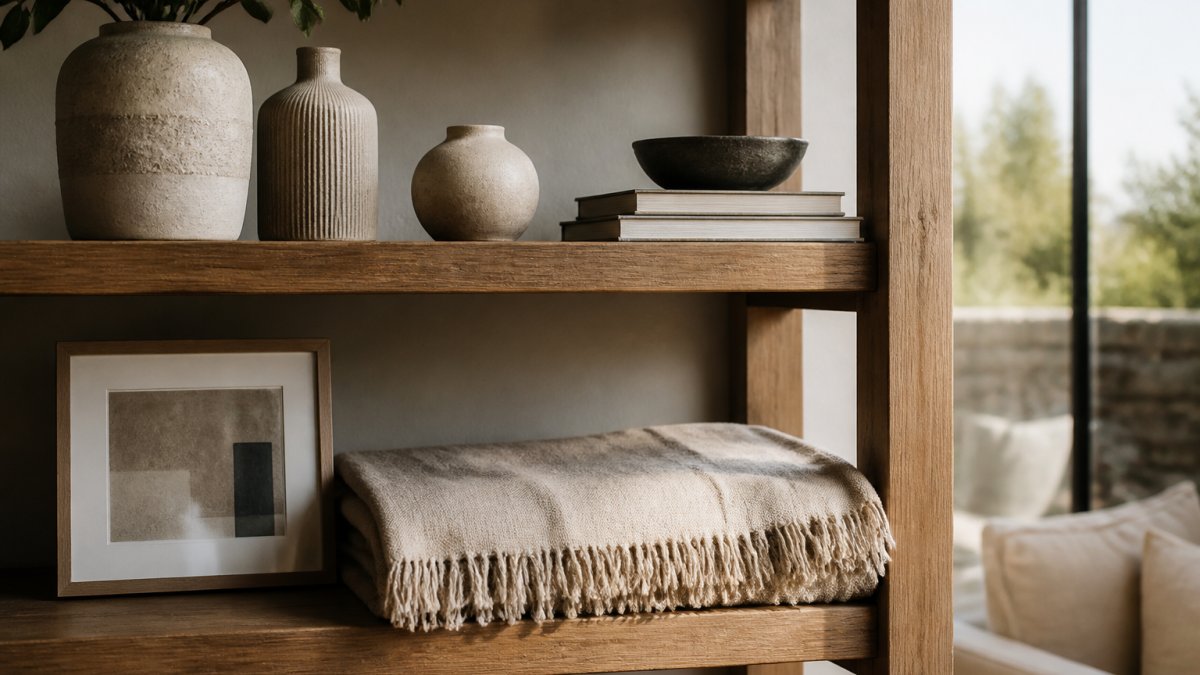
Warings at Home homeware reads as a more traditional home store. The emphasis sits on breadth: home furnishings, furniture, accessories and gifts gathered under one roof, both online and in-store.
Where a curated brand edits hard, a broader home store gives you more to sift through. That suits some shoppers and overwhelms others.
The honest limitation: a bigger range means more decisions and less curation. You do the editing yourself.
Judging home textile quality online comes down to four things: fibre content, weave or weight, finish, and the honesty of the product description. A retailer that states fibre composition and care clearly is usually worth trusting.
Here's how to read a listing before you commit:
If you want a practical method for judging fabric from a screen, our guide on how to assess fabric quality online walks through exactly what to check before you buy.
Textiles that last share three traits: honest materials, construction that holds up to washing and use, and a design you won't tire of in a season.
A simple checklist before you buy:
That last point matters more than most shoppers think. The reason handmade textiles tend to outlast mass-produced ones is covered in our piece on why choose handmade textiles over mass-produced: construction and material honesty do the heavy lifting.
Price is where most homeware round-ups go vague. Pricing for both retailers depends on the piece, its size, delivery and any promotions running at the time, so compare on structure, delivery cost, returns, and how sale terms affect your total, rather than a headline figure.
Here is the framework to apply, with the specific things to check on each retailer's own delivery and returns pages before you commit:
| What to compare | Why it matters | What to check on Willow and Rowe | What to check on Warings at Home |
|---|---|---|---|
| Standard delivery cost and free-delivery threshold | A cushion's price can rise noticeably once delivery is added at checkout | The free-delivery minimum and the standard rate below it | The same, plus whether in-store collection is free |
| Express and named-day options | Matters for gifts and for scheme deadlines | Whether express is offered and at what rate | Whether express is offered and at what rate |
| Returns window | Textiles often don't suit once they're in the room | The number of days from delivery, and whether it runs from dispatch or receipt | The same, and whether the window differs in-store versus online |
| Who pays return postage | A £4.95 return can wipe out a small saving | Whether returns are free, prepaid or at your cost | Whether returns are free, prepaid or at your cost |
| Sale and clearance terms | Discounts can hide final-sale rules | Whether sale items are returnable and any reduced window | Whether sale items are returnable and any reduced window |
| Stock and lead times | An out-of-stock piece delays a whole scheme | Whether 'in stock' means ready to dispatch, and the stated lead time | The same, plus whether in-store stock differs from online |
| Customer service access | Problems need a human, fast | Phone, email or chat, and stated response times | Phone, email or chat, and stated response times |
Because both retailers revise delivery charges, free-delivery thresholds and returns terms periodically, treat any figure quoted elsewhere, including in older reviews, as indicative only. Confirm current terms on each retailer's own delivery and returns page on the day you order, and screenshot the terms at checkout if the order is significant.
If you are comparing more than two retailers, keep a simple spreadsheet with one row per candidate piece and columns for item price, delivery, return postage, returns window and lead time. Totalling landed cost across three or four options takes ten minutes and routinely changes which retailer looks cheapest.
Most comparison pages stop at 'it depends'. Here is a direct verdict, with the reasoning made explicit so you can check it against your own priorities.
Choose Willow and Rowe if:
Choose Warings at Home if:
The trade-offs, stated plainly:
A note on evidence. When reading reviews, bear in mind that reviews on a retailer's own site may be moderated, and that independent platforms have their own sample sizes and dates.
If you are still weighing alternatives beyond these two, our roundup of Rockett St George alternatives for textiles puts more independent options side by side, and our guide on understanding British designed homeware explains what design-led positioning actually means in practice.
Once you've compared the retailers, shortlist two or three pieces and check them against your actual room, not the product photo. Order a fabric swatch where you can, measure the space, and confirm returns terms before you buy.
A quick sequence that saves regret:
If you're working with a smaller space, our guide on styling artisanal textiles in small living rooms shows how to make a few good pieces do the work of many.
Both are independent homeware retailers, but they lean towards different shopping styles. Willow and Rowe is generally regarded as a curated, design-led retailer, while Warings at Home is often described as a more traditional home store. The practical difference comes down to range depth, how much you can see before buying, and which delivery and returns terms suit you. Check each retailer's current product range and terms directly before ordering, as both change seasonally.
Neither is universally better. For a home textile quality comparison, look at fibre content, weave density, washing instructions and whether the retailer publishes care guidance. A retailer with a narrower range but detailed product information often beats a larger one where listings are thin. If you cannot handle the fabric first, ask for a sample or swatch, and check the returns window covers you long enough to test the item in your own room.
Independence does not automatically guarantee British manufacturing, so ask where each item is made if that matters to you. A genuinely UK-made piece should come with clear origin information on the listing or on request. If a retailer cannot confirm where something is manufactured, treat the claim with caution.
Before ordering, confirm four things: exact dimensions, fibre or material content, the returns window and who pays return postage. Check whether colours are described as accurate to screen and whether the retailer offers fabric samples. Read independent reviews for delivery and after-sales service rather than just product ratings. Finally, measure your space before you buy, since returning bulky homeware is far more hassle than returning a small accessory.
Comparing retailers is the easy part. Knowing which piece will actually work in your room, in your light, with your existing scheme, is where most shoppers get stuck. Aurina is an independent boutique built for exactly that: British design-led textiles, bespoke interior design, and custom fabrics and cushions made to order, with personal advice whether you visit in person or shop remotely. Get started with Aurina and find a piece that fits your space, not just a product page.
Comments will be approved before showing up.
