
Your Basket is Empty
Email shop@aurina.co.uk for bespoke advice

Last Updated: October 18, 2026
A fabric can look rich and heavy in a photograph and arrive feeling thin and stiff. That gap between screen and doorstep is the single biggest risk in buying textiles online, and it is why so many shoppers stick to shops they can walk into. At Aurina, we know exactly which details separate a good buy from a disappointment.
Fabric quality is the combination of fibre content, weight, weave density and finish that determines how a cloth feels, drapes and wears over time. You cannot feel those things through a screen, but you can read them. The clues are there in the listing, the photographs and the specifications, if you know where to look.
Below, we break down the checks we use ourselves, from composition labels to the sample request most shoppers never bother with.
Start with the fibre label, because composition drives everything else. A listing that hides its fibre content is a listing you should treat with suspicion. Look for a clear breakdown, ideally with percentages.
Here is what to look for:
If a shop cannot tell you what a fabric is made from, ask. The UK government guidance on textile fibre labelling sets out the rules on describing fibre content, so a reputable seller should have this to hand.
Weight is the most underrated number in any fabric listing. It tells you how a cloth will hang, how warm it will be and how long it will last. Lightweight fabrics suit curtains and summer clothing. Heavier cloths suit upholstery and structured pieces.
| Weight | Typical Use | What to Expect |
|---|---|---|
| Light (under 150gsm) | Blouses, sheer curtains | Flowing, delicate, needs care |
| Medium (150-250gsm) | Dresses, cushions, light upholstery | Versatile, holds shape well |
| Heavy (250gsm+) | Upholstery, coats, structured pieces | Durable, firm, less drape |
If a listing gives no weight, ask for it. A seller who knows their stock will answer quickly. A seller who cannot is telling you something too.
Photographs hide more than they show, but they still give clues. Zoom in and look at how the light falls across the surface. A tight weave shows even texture. A loose weave shows gaps and shadow.
Look for these signals:
Samples are the closest thing to standing in the shop. A small swatch lets you check colour in your own light, feel the weight and see how the cloth creases. Most good sellers offer them, and the small cost is nearly always worth it.
Vintage Rose Fabric in Blue & Stone →
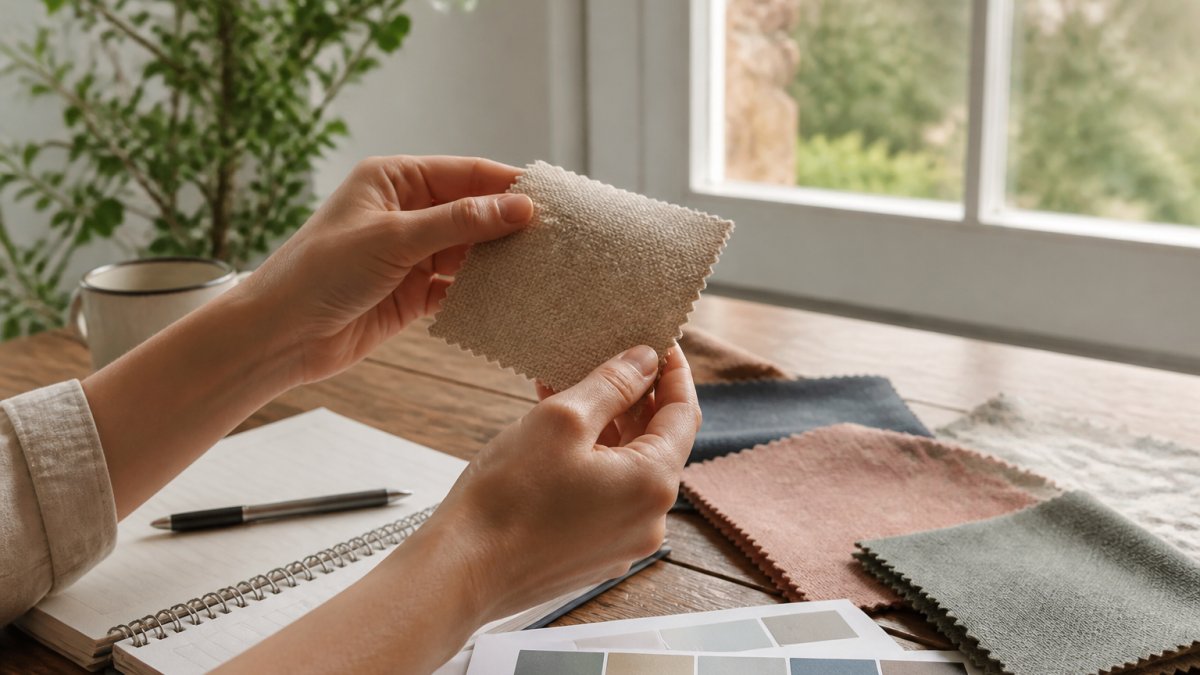
When your sample arrives, do three things:
If the sample matches the photos and feels right in your hand, order with confidence. If not, you have saved yourself the cost of a return.
The right questions get you the right answers. Before you commit, ask the seller:
A seller who welcomes these questions is usually one worth buying from. At Aurina, our Vintage Rose Fabric in Blue & Stone comes in a cotton and linen union at 150cm width, and we are always happy to talk through how it will sit in your space before you order.

Buying fabric online asks you to trust a screen, and that never feels entirely comfortable. The good news is that composition labels, weight figures, honest photographs and a simple sample request close most of the gap. Take those steps and you can choose cloth with real confidence, wherever you are.
Photos help, but only up to a point. Look for close-up shots that show the weave clearly, natural lighting rather than heavy filters, and images of the fabric draped or in use rather than flat. A good listing will show the reverse side and a sense of scale. Photos cannot tell you how a fabric feels or how it hangs in a room, which is why ordering a sample remains the most reliable check before you commit to a larger purchase.
Fabric weight is usually given in grams per square metre (GSM). As a rough guide, lightweight fabrics sit around 100 to 150 GSM, medium weights around 150 to 250 GSM, and heavier upholstery or curtain fabrics above 250 GSM. If a listing gives no weight, ask the retailer directly. A weight figure paired with a composition tells you far more about how a fabric will behave than a photo alone ever can.
Yes, particularly for curtains, upholstery or anything made to order. A sample lets you check the true colour in your own light, feel the weight and texture, and see how the fabric drapes. Many independent retailers supply samples at little or no cost, and it is far cheaper than returning a made-to-measure item that turned out wrong. Hold the sample against your walls and existing furnishings before deciding.
Read reviews that mention colour accuracy, how the fabric washed or wore over time, and whether it matched the description. Comments about items arriving looking different from the photos are a warning sign. Look for reviewers who describe their actual project, such as making curtains or a blouse, because they tend to notice drape, shrinkage and finish. A pattern of similar comments across several reviews is more telling than a single glowing one.
Choosing the right fabric for your home should feel personal, not risky. At Aurina, we offer British design-led textiles and a genuinely helpful ear, with bespoke interior advice, custom fabric and cushion options, and one-off pieces made to order. Subscribe to our newsletter and let us help you find cloth you will love for years.
Comments will be approved before showing up.