
Your Basket is Empty
Email shop@aurina.co.uk for bespoke advice

Last Updated: 26 October 2026
Quick Summary
Sustainable wallpaper is a wall covering made, printed and finished to limit environmental harm and indoor pollution across its whole life, from fibre source to removal. Choose uncoated non-woven papers printed with water-based inks, hung with ready-mixed water-based adhesive, and judge every option on durability as well as materials.
Sustainable wallpaper is a wall covering made, printed and finished in a way that limits environmental harm and indoor pollution across its whole life, from fibre source to the moment it comes off the wall.
That third point matters more than most buyers expect. A paper that looks green on the label but discolours or peels within a couple of years is not sustainable in any useful sense, because you replace it, and the whole cycle restarts. Durability is an environmental feature, not just a quality one.
But first, here is what most guides get wrong: they treat "sustainable" as a single tick box when it is really a chain of decisions, and one weak link undoes the rest.
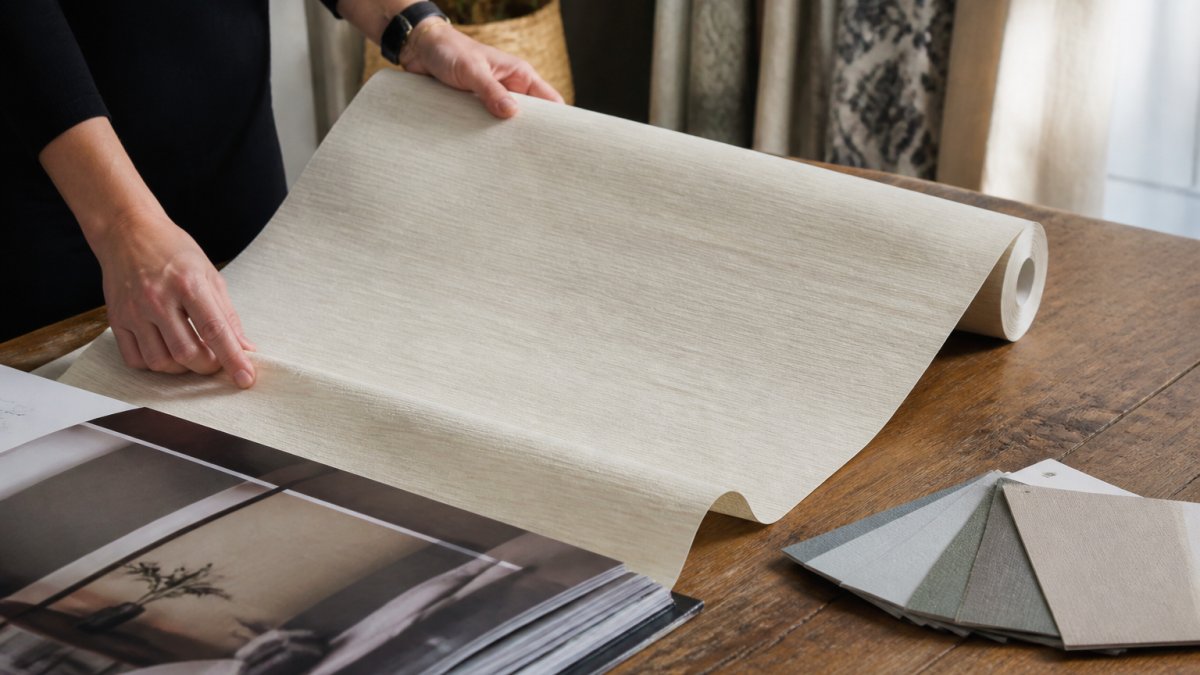
Here is what separates a good specification from a vague one:
The paper itself is rarely the problem. The paste and any surface coating usually are. A few practical rules:
If someone in the household has sensitivities, hang the paper well before the room is used again and let it settle. The NHS guidance on indoor air quality and ventilation is a sensible starting point for anyone worried about fumes at home.
What most guides miss is that ink choice affects the paper's finish too. Water-based inks sit on uncoated stock in a way that keeps a soft, matt look, which suits period homes and modern rooms alike. That is part of why our own papers are printed on uncoated, non-woven stock, with the Health and Safety Executive guidance on substances and coatings as the reference point for what counts as a safer formulation.
The rules we give customers:
Get those right and a good non-woven paper will sit happily in a bathroom for years. Get them wrong and no paper, however green, will survive. This is where the sustainability argument and the practical one meet: the most eco-friendly choice is the one you do not have to redo.
Our listed wallpapers are printed to order, with a four to five week delivery time. Readers assessing responsible British production can explore the Benefits of Buying British Made Homeware. Readers questioning whether handmade justifies the cost can read Why Choose Handmade Textiles Over Mass-Produced for the case for handmade over mass-produced goods.
The Dotty Chevron Wallpaper is £105.00 and is available in 10 metre rolls. The Vintage Rose Wallpaper in Sage & Stone is £105.00; it is one of Aurina's original and best-selling designs, with simple colour and design. The Peony Flower Print Wallpaper in Sky Blue is £105.00 and is described as a charming ditsy peony print in subtle blue and stone.


Here are the listed papers and their prices at a glance.
| Wallpaper | Price | Key detail |
|---|---|---|
| Dotty Chevron Wallpaper | £105.00 | Available in 10 metre rolls |
| Vintage Rose Wallpaper in Sage & Stone | £105.00 | One of Aurina's original and best-selling designs |
| Peony Flower Print Wallpaper in Sky Blue | £105.00 | Charming ditsy peony print in subtle blue and stone |
The listed wallpapers are printed to order, with a four to five week delivery time.
Sustainable wallpaper usually means paper made from responsibly sourced or recycled fibres, printed with water-based inks, and produced close to where it is sold. Uncoated, non-woven papers avoid plastic coatings that stop paper being recycled. Longevity mattrs too: a paper that stays on the wall for a decade uses fewer resources than one replaced every two years. Ask the retailer where it is printed and what the base paper is made from.
Uncoated non-woven paper is the strongest all-round choice. It uses wood pulp from managed forests, contains no PVC, and can be recycled in many local authority collections. Paper-backed natural wallcoverings such as grasscloth are biodegradable but harder to clean. Avoid vinyl and coated papers if recycling mattrs to you, because the plastic layer makes separation difficult. Check the listing for the base material before you buy.
Non-toxic wallpaper refers to paper printed with water-based inks and free from solvent-heavy coatings, which reduces the volatile organic compounds released into a room. Newly printed paper can still carry a faint ink smell, so air the room for a few days after hanging. If anyone in the household has sensitivities, ask the retailer to confirm the ink type and whether the paper is uncoated.
Yes, with care. Uncoated paper suits bathrooms that are well ventilated and where the paper is not in direct contact with splashes, such as above a basin or on a feature wall away from the shower. Seal it with a breathable primer and keep the room ventilated. For splash zones, tile or moisture-resistant panelling is the safer option, so plan where the paper stops.
Look for a clear statement of where the paper is printed and what it is printed on. A retailer who prints to order in the UK and names the base material is giving you something verifiable. Ask about the ink type, the paper's coating, and the delivery lead time, which tells you whether rolls are made to order rather than mass-produced and stored. Vague claims about being green without specifics are a warning sign.
Uncoated paper wallpaper can often go in your local council's paper recycling, but check their rules first because paste residue and coatings affect what they accept. Strip old paper by scoring and soaking rather than scraping dry, which damages the plaster. Vinyl and coated papers usually go to general waste. Leftover rolls from a printed-to-order design are worth keeping for future patches.
Comments will be approved before showing up.
