
Your Basket is Empty
Email shop@aurina.co.uk for bespoke advice

Last Updated: 17 October 2026
Sustainable home decor is the practice of furnishing a home with pieces made from recycled, natural or responsibly sourced materials that are built to last, and buying them second-hand or from makers who work on a small scale. At Aurina, we see it work best when a room mixes a few well-made things rather than many cheap ones.
Norfolk homes ask a lot of their interiors. Coastal salt air, damp winters and old buildings with uneven walls all punish flimsy furniture and thin fabrics. That makes the case for buying less and buying better.
Three reasons it suits local homes:
Below, we walk through the ideas, textiles and sourcing routes that work in practice, and the mistakes that cost people money.
Start with what the room already gives you. In a period property, work with the beams, the sash windows and the uneven floors rather than covering them up. In a coastal home, lean into pale timber, linen and glass that reflect the light.
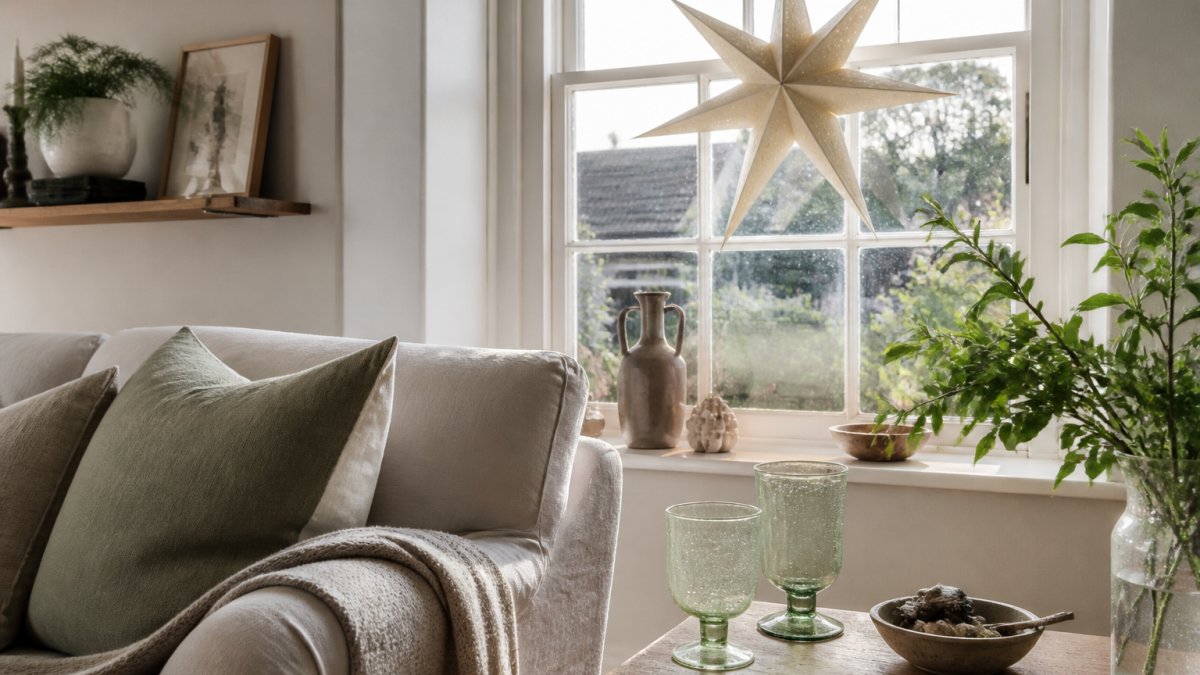
Practical sustainable home decor ideas that hold up in both settings:
Our Electric White Paper Star is a good example of the last point. It is hand-crafted from recycled strong paper, mains operated with a 3.5m cord, and made to be used again and again. It arrives flat and needs self-assembly, and the bulb is not included, so factor that in.

Look at the fibre, the weave and the maker before you look at the price. Sustainable home textiles are those made from natural or recycled fibres, woven to last, and produced by makers who can tell you where the material came from. Everything else is marketing.
A quick checklist before you commit:
For anyone ordering online without seeing the cloth first, request a sample or a close-up photo in daylight. Colours shift between screens, and a fabric that looks warm grey on a phone can read cold blue in a north-facing room.
Handmade textiles are made in small runs by individual makers or small workshops, which usually means better materials, tighter quality control and a piece you will not see in every other house on the street. The trade-off is cost and lead time.
Mass-produced textiles compete on price. They are made in huge volumes, often from blended fibres, and are designed to be replaced. Small-batch work competes on how long it lasts and how it feels in the hand.
What most guides miss is the repair question. A hand-woven cushion cover or a solid timber frame can usually be mended. A mass-market equivalent often cannot, so it goes to landfill the moment it fails.
Ask three questions and you will usually get a straight answer:
If a seller cannot answer any of these, treat the claim as unproven. Genuine makers are usually pleased to talk about their work.
Second-hand home decor is the cheapest route to a sustainable room, and often the fastest way to add character. Auction houses, charity shops, house clearance sales and online marketplaces all turn up good pieces if you look regularly.
Where to look, and what each source is best for:
| Source | Best For | What to Watch |
|---|---|---|
| Charity shops | Glassware, frames, small ceramics | Chips and hairline cracks |
| Auction houses | Furniture, rugs, mirrors | Buyer's premium on top of the hammer price |
| House clearance sales | Whole-room lots, storage pieces | Condition, and transport costs |
| Online marketplaces | Lighting, textiles, one-off finds | Ask for daylight photos before travelling |
Styling second-hand pieces takes a little nerve. Group similar materials together, keep the palette tight, and let one odd piece be the focal point. A mismatched set of recycled glass goblets, for example, looks deliberate when the rest of the table is plain.
Our Recycled Wine Goblet in Pink and the Blue Grey version are made only from recycled glass and cost £10.95 each. Surface imperfections are part of the character. Mixing the two colours down the centre of a table is a simple way to get that collected look without hunting for years.


Buy from makers you can visit where possible, and from sellers who publish clear material and origin details where not. Local sourcing cuts transport and lets you see the piece first. Online sourcing widens the choice, but only if you ask the right questions before you pay.
A shortlist for both routes:
At Aurina, we are an independent boutique, and we design and manufacture in the UK. That means we can talk you through a fabric, send extra photos, and make one-off interior pieces to order. If you are ordering remotely and cannot visit, ask for close-ups in daylight and a sample where the maker offers one. It is the next best thing to standing in the room.
The biggest mistake is treating "sustainable" as a label rather than a set of questions. A product can be recycled, natural and still badly made. Check the construction, not just the wording on the tag.
Other mistakes we see often:
There is also a quieter mistake: buying sustainable pieces and then replacing them within two years because they do not suit the room. Take your time. A slower scheme is usually a better one, and it is kinder to your budget.
Building a sustainable home takes patience, and the reward is a room that feels collected rather than bought in a hurry. Start with one or two pieces you love, check the materials and the maker, and add to the scheme as you find the right things.
If you would like help pulling it together, we are always happy to talk it through. Aurina offers personal shopping advice, access to custom fabrics and cushions, and one-off interior pieces made to order, all designed and manufactured in the UK. Subscribe to hear about new arrivals and maker stories, or get in touch and we will help you find the right piece for your home.
Sustainable home decor usually means three things: materials that are recycled, natural or responsibly sourced; production that avoids unnecessary waste; and a lifespan long enough to justify the resources used. A recycled glass goblet, a hand-crafted paper star made from recycled paper, or a second-hand wooden chair all meet that test. The common thread is buying fewer things, choosing better, and keeping them for years rather than replacing them each season.
Often, yes, but it depends on the maker. Handmade textiles tend to be produced in small batches, which means less overproduction and less waste sitting unsold. They are also easier to repair and more likely to be kept long-term. Ask where the fibre comes from, how the piece is finished, and whether the maker offers repairs. A handmade cushion that lasts a decade beats three cheap ones that pill after a year.
Start with what you already own. Rearrange furniture, rotate cushions and throws between rooms, and add one or two considered pieces rather than a full refresh. Second-hand home decor is ideal here: a single vintage lamp or a pair of recycled glass goblets can change how a room feels for under £30. If you do buy new, choose items you can repair and that suit the room's proportions, so you are not buying again in two years.
Check the material list first, then the dimensions, then the returns policy. Reputable sellers state sizes in centimetres and name the materials plainly. Look for evidence of where an item is made rather than a vague 'ethically sourced' badge. If colours matter, ask for a fabric or paper sample before committing, and confirm you can return the piece if it does not suit the room. A clear returns policy is a good sign the seller expects you to inspect properly.
Comments will be approved before showing up.