
Your Basket is Empty
Email shop@aurina.co.uk for bespoke advice

Last Updated: 21 October 2026
Ethical shopping is the practice of choosing homeware based on how it was made, who made it, and what happens to it at the end of its life, not just how it looks. At Aurina, we think of it as buying fewer things and knowing more about each one. The phrase "ethical shopping guide for home decor" usually brings up a wall of certifications and conflicting advice, so here is the version that actually helps when you are standing in a shop or scrolling a product page.
The core idea is simple: every object in your home has a supply chain behind it. Ethical shopping means asking where the materials came from, whether the maker was paid fairly, and whether the piece will still be in use in ten years. That last question matters most, because the greenest cushion is the one you never replace.
Below, we break down what to look for, what to ignore, and how to build a home that reflects your values without throwing out everything you already own.
Start with three filters in this order: longevity, provenance, and material. Longevity rules out anything you suspect will look tired within a season. Provenance tells you who made it and where. Material covers what it is made from and how it will behave over time. Run every potential purchase through all three before you look at the price.
If a retailer cannot answer the first two, that is your answer. A shop that knows its makers tends to say so without being asked.
Certifications are useful shortcuts, but only when you know what they cover. A label confirming recycled content says nothing about labour conditions, and a "natural" claim says nothing about how the material was processed. Treat vague words like "eco-friendly" and "sustainable" as marketing until a specific standard or a named supplier backs them up. The Advertising Standards Authority guidance on environmental claims sets out what businesses are actually allowed to imply, which is worth knowing when a label feels too good to be true.
Natural fibres such as linen, wool, and cotton are the default for a reason: they age well, can often be repaired, and feel better in use than most synthetics. Linen softens with every wash. Wool regulates temperature and resists odour. Cotton is versatile but thirsty for water, so look for organic or recycled versions where the price allows.
The bigger decision is usually blend versus pure. Pure natural fibres are easier to repair and break down at end of life. Blends can be more durable and cheaper, but they are harder to recycle. For cushions and throws that take daily wear, a wool blend can be the practical choice. For curtains and bedding, pure linen or cotton tends to last longer and look better doing it.
Fabric choice is also a colour decision. Natural undyed fibres limit your palette, so if you want a specific shade, ask how the dye was applied and whether the process is covered by any environmental standard.
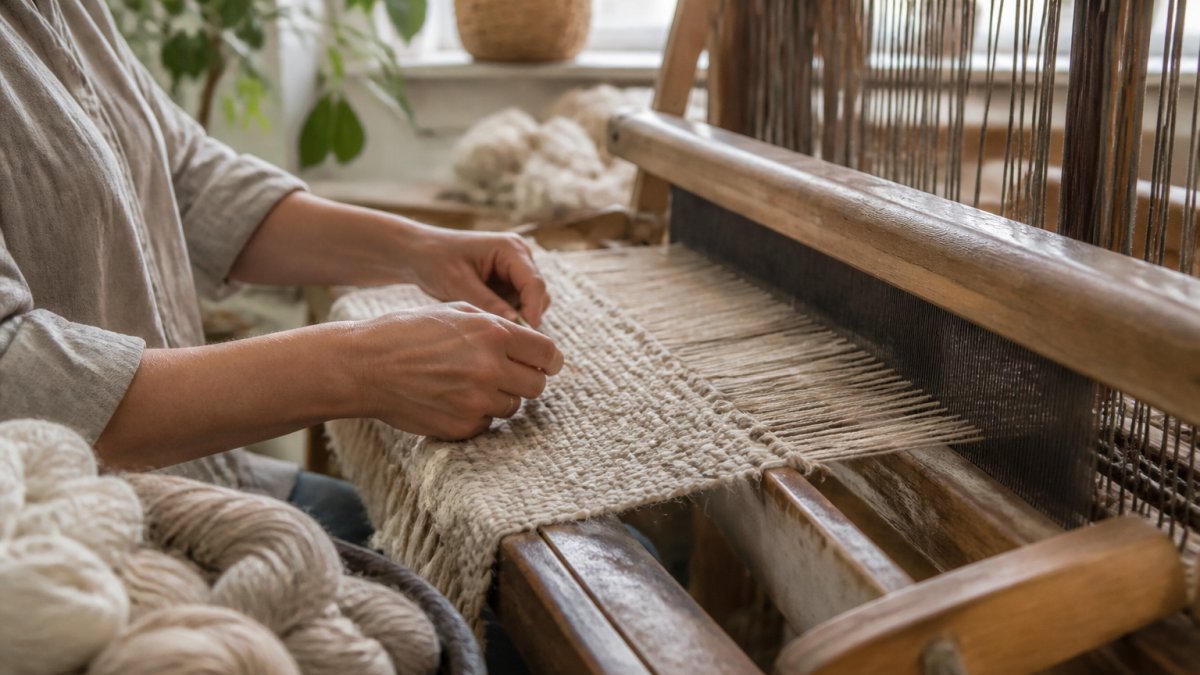
Handmade textiles cost more because a person made them, and that person's time is in the price. What you get for the difference is consistency of a different kind: small variations in weave and colour that read as character rather than defect, and a piece that was made in small runs rather than to a minimum order quantity.
There is a practical argument too. Handmade pieces are usually made from materials the maker chose, which means they can often be repaired by the same workshop. A machine-produced cushion cover is disposable by design. A handwoven one can be re-sewn, re-stuffed, or repurposed.
This is where our own approach comes in. We work with a small number of makers and keep runs short, which is why our Hand Woven Round Basket at £39.95 is hand made rather than mass produced. It is a shopping basket, a beach bag, or a loo roll holder, depending on where you put it, and it is built to be used for years rather than a season.

Second-hand is the most ethical purchase available, because it requires no new materials and creates no new demand. A pre-owned lamp, mirror, or chair has already paid its environmental cost. The only question is whether it suits your room.
The practical route is to set a saved search for the specific pieces you want rather than browsing aimlessly. Know your measurements before you go looking, including ceiling height and doorway width, because the most common second-hand mistake is falling for something that will not fit. Check joints, hinges, and any upholstery for wear, and factor in the cost of re-covering if the frame is good but the fabric is not.
Where second-hand falls short is textiles and anything with a strong personal fit, such as cushions and bedding. That is usually where buying new, from a maker you trust, makes more sense than compromising on hygiene or fit.
The most common mistake is replacing a whole room at once. Ethical shopping rewards patience, and a room assembled over a year from considered pieces will look better than one bought in a weekend.
The second is treating certifications as a substitute for questions. A logo on a label does not tell you whether the piece will last, and longevity is where most of the environmental benefit sits.
The third is confusing "natural" with "ethical". A natural fibre produced with heavy chemical processing is not automatically the better choice, and a recycled synthetic can outperform a poorly made natural alternative.
You do not need a clearance sale and a fresh budget. Start with the pieces you touch every day: bedding, towels, cushions, glassware. Replacing those first gives you the most daily benefit per pound spent.
Then add one considered piece per season rather than a full refresh. A pair of Recycled Wine Goblets - Pink at £10.95, made exclusively from recycled glass, does more for a table setting than a full new dinner service, and the Crown Recycled Glass Tumbler - Grey at £9.95 mixes with it for a layered look. Both carry surface imperfections by nature of the recycled glass, which is part of the point rather than a flaw.


The Waste and Resources Action Programme guidance on household consumption is a useful reminder that most of a product's impact is locked in before it reaches your door, which is why buying less and buying better beats buying "green".
| Approach | Effort | Cost | Best For |
|---|---|---|---|
| Second-hand first | Medium | Lowest | Furniture, lighting, mirrors |
| Handmade new | Low | Higher | Textiles, baskets, tableware |
| Recycled materials | Low | Low to mid | Glassware, accessories |
| Repair and re-cover | Medium | Low | Sofas, chairs, curtains |
Ethical home décor considers the full life of an item: how materials are sourced, how makers are treated, and what happens when you no longer want it. That means looking for transparent supply chains, fair wages, lower-impact materials, and durable construction. It also means asking whether a piece was made to last or made to be replaced. Ethical shopping for home decor is less about a single label and more about a pattern of choices across your home.
Start with the materials and the maker. Look for specific claims rather than vague green language: named fibres, stated origins, and clear information about where a piece was manufactured. Certifications help, but so does a brand that answers questions directly. If a retailer cannot tell you what something is made from or where it was produced, treat that as a signal. Durable construction and repairability are also strong indicators of a considered product.
Handmade home textiles usually involve slower production, smaller batches, and more visible craft. That often means better material quality and construction you can inspect, plus the knowledge that your money supports a specific maker rather than an anonymous factory line. Handmade pieces also tend to be repairable and unique. The trade-off is higher cost and longer lead times, but for cushions, throws, and table linens, the difference in how they wear is usually noticeable.
Generally, yes. Second-hand home décor avoids new manufacturing, new material extraction, and the emissions of producing something from scratch. The item already exists, so the main impact is transport and any restoration. The caveat is quality: check for structural damage, and be realistic about whether you will actually use it. Buying second-hand also keeps pieces out of waste streams, which matters for furniture and ceramics that are hard to recycle.
Ask where the item is made, who makes it, and what it is made from. Then ask how to care for it and whether replacement parts or repairs are available. A good brand will answer these without hesitation. For textiles, ask about fibre content and expected wear. For wallpaper, ask about paste and removal. If you are ordering remotely, ask about returns and whether samples are available, since colour and texture are the most common reasons a piece does not work at home.
Ethical shopping for the home is less about finding perfect products and more about asking better questions before you buy. If you would rather have someone do that filtering with you, Aurina can help: we offer personalised shopping advice, access to custom fabrics and cushions, and one-off interior pieces made to order, all from our independent shop. Subscribe to hear when new pieces arrive.
Comments will be approved before showing up.